
Private & Self-Hosted AI
Your models, your infrastructure, your data.
Some data cannot leave the building. Some cost curves do not survive a per-token bill. We deploy open-weight models on infrastructure you control, and we make them fast enough and cheap enough to actually use.
The problem
Downloading weights is not running a service.
A model that loads on one GPU and answers one question at a time is a demonstration. A model serving a product has to handle concurrent requests without the latency collapsing, fit the memory you have, survive a node restart, and cost less per million tokens than the API you were trying to leave.
Getting there is quantisation choices, an inference server tuned properly, batching strategy, KV cache management, and a hard-won understanding of where your GPU memory is actually going. It is unglamorous infrastructure work, and it is the part almost nobody does.
What we do
Specific work, and the judgement to know which you need.
Open-weight model deployment
Qwen, Llama, DeepSeek, Mistral, Gemma, GLM, gpt-oss and Phi — on cloud GPU instances, your own servers, or a private cloud tenancy.
Inference serving and tuning
vLLM and comparable stacks configured for your traffic shape: continuous batching, KV cache sizing, tensor parallelism, and quantisation measured against real quality loss.
Capacity and cost modelling
What GPU footprint your load needs and what it costs per million tokens against the commercial API. Sometimes the honest answer is that the hosted API is cheaper.
Fine-tuning and adaptation
LoRA, QLoRA and full fine-tuning where the case is made, with the evaluation work that proves the tuned model is better rather than merely different.
Data residency and compliance
Deployments where data never leaves a jurisdiction, a network or a tenancy — with the documented data path, access control and audit logging to evidence it.
The rest of the pipeline
Open embedding models for retrieval, speech-to-text for transcription and vision-language models for documents — self-hosted alongside, so no stage reaches a third party.
Cloud, environments and release discipline
Separate development, QA and production environments with CI/CD from the first sprint, AWS infrastructure, encryption at rest and in transit, role-based access control and regular security audits. On a system serving a model to real users, the pipeline is part of the safety argument.
How we work
Assess, build, operate.
Assess
We start with your workflow, your data and your constraints — not with a model choice. Two to four weeks. You leave with an architecture, a scope, a cost and latency envelope, and an honest answer on whether the thing is worth building at all.
Build
A small senior team works inside your process, not alongside it. Environments, CI/CD, evaluations and security are set up in the first week rather than bolted on before launch.
Operate
We stay on after go-live — scaling, new features, model and dependency updates, incident response. Most of our engagements are measured in years.
Proof
Work we have shipped.
Serving a 72B Open-Source Model Under Concurrent Load
Deploying Qwen 2.5 72B in-house with concurrent API request handling, serving architecture and performance stability under load.
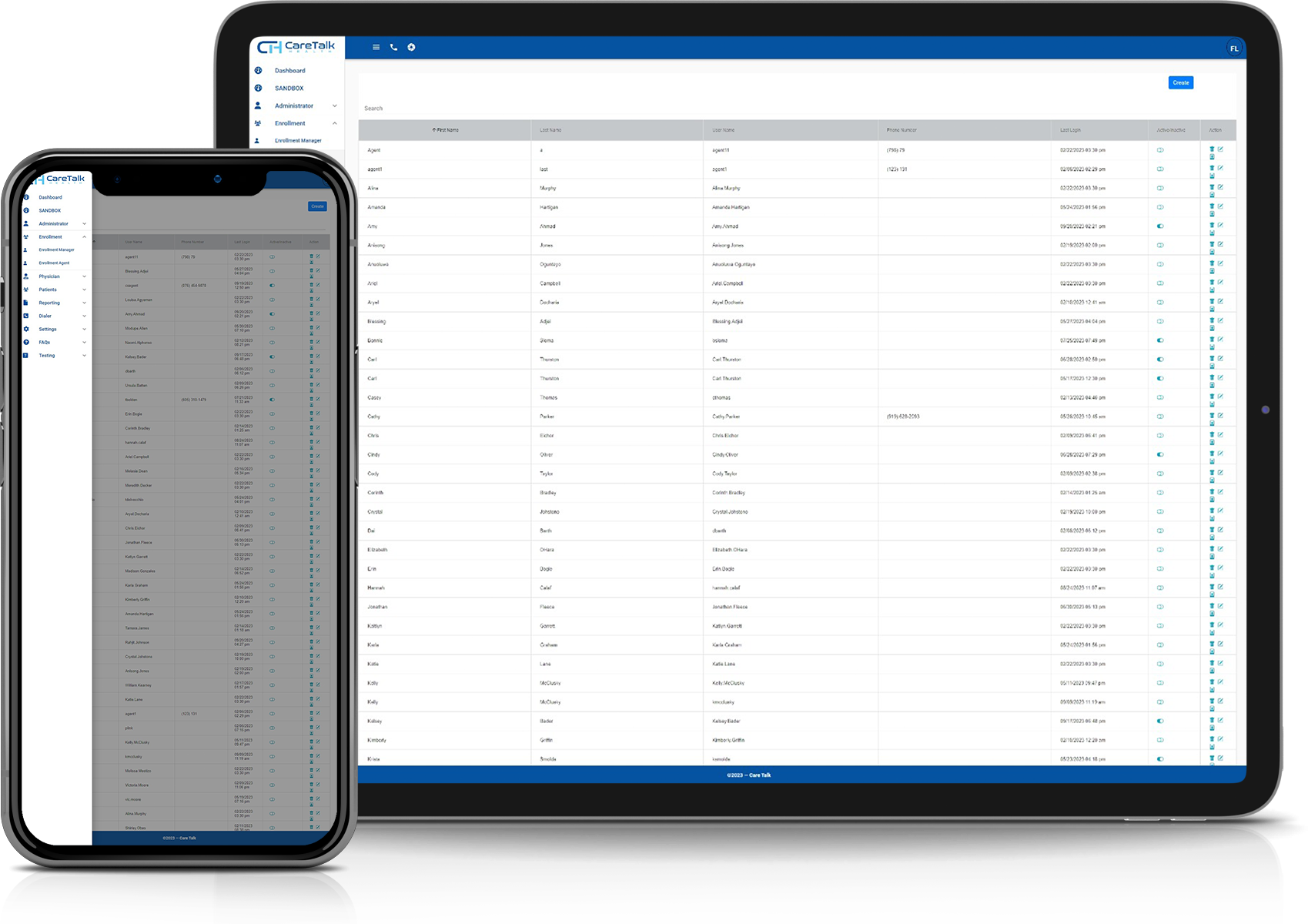
Chronic Care Management System
A single platform for Medicare chronic care management: enrolment, call scripts, care plans, scheduling, VOIP and video.
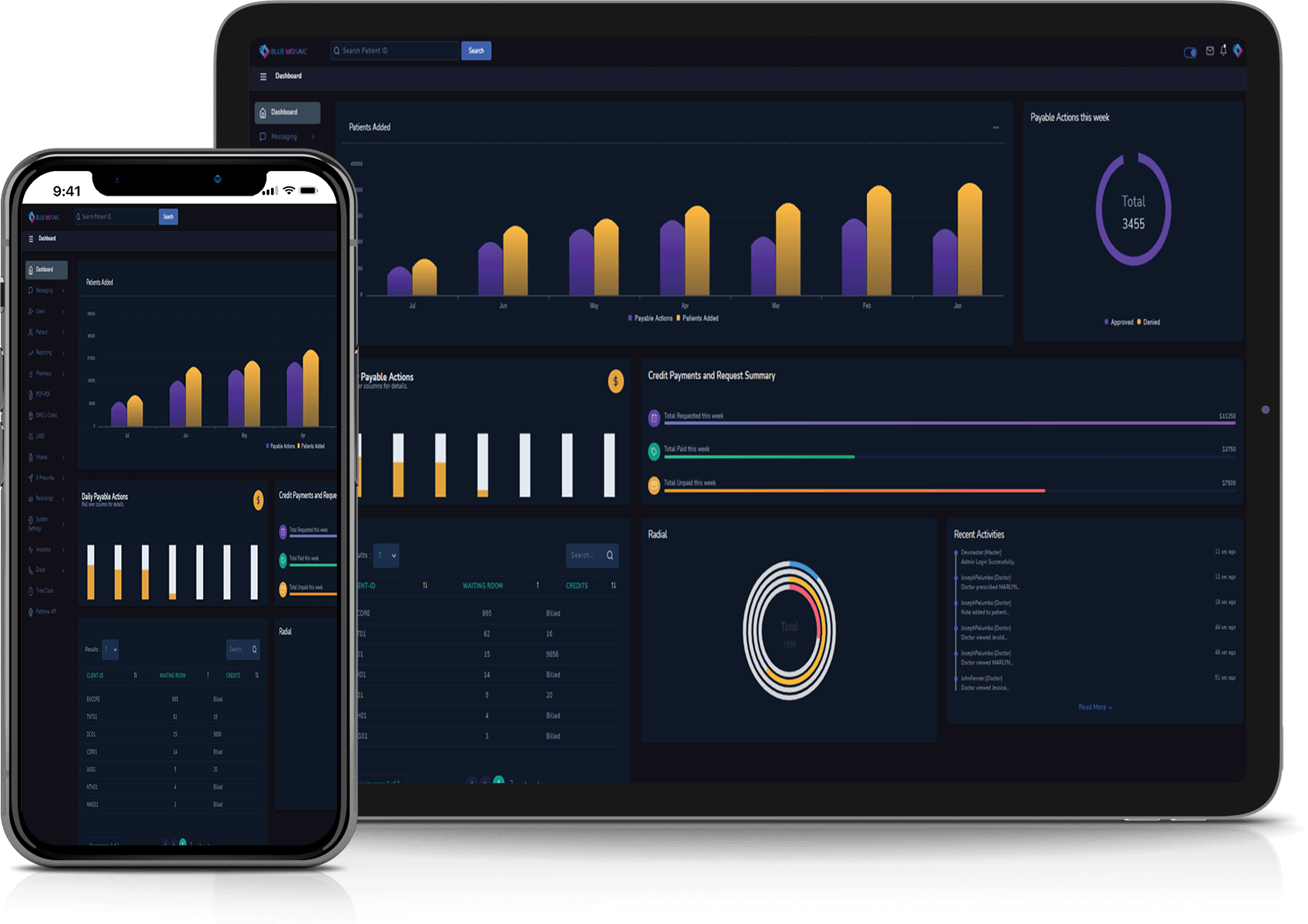
Healthcare Management CRM
A turnkey, HIPAA-compliant CRM that puts telemedicine, labs, pharmacy groups, physicians and hospitals on one platform.
In their words
“This was a very difficult C++ and C# project of taking multiple SDK projects and remotely viewing the data. IRA Softwares’ team did exceptional work with this and will be hired for many more projects to come.”Chief Technology Officer — OnMed, MD-PLUS Inc
Questions
What clients ask us first.
Why would we self-host a model instead of using a hosted API?
Three reasons, in order of how often they turn out to be the real one. Data that cannot leave a jurisdiction or a network. Cost, once token volume is high enough that a per-token bill overtakes a fixed GPU bill. And control — no deprecation notices, no silent model updates changing your output. If none of those applies, a hosted API is probably right and we will say so.
At what volume does self-hosting become cheaper?
It depends on model size, GPU cost and how well the serving is tuned, so we will not quote a threshold we cannot stand behind. We build the cost model during the assessment using your projected volume and the hardware a given model actually needs, and compare it against the commercial API for equivalent quality. You get the crossover point for your case.
Which open-weight models do you work with?
Qwen, Llama, DeepSeek, Mistral, Gemma, GLM, gpt-oss and Phi, plus open embedding, speech-to-text and vision-language models for the rest of the pipeline. All of them can be hosted on your infrastructure and fine-tuned on your data. Licences differ in ways that matter at scale — most are Apache 2.0 or MIT, while Llama carries a community licence with a user threshold.
Can you run a model on our own hardware rather than in the cloud?
Yes. We deploy to cloud GPU instances, private cloud tenancies and on-premise servers. On-premise brings its own constraints — you own the capacity ceiling, and scaling means procurement rather than an API call — so we size conservatively during the assessment and design for the ceiling you will actually have.
How do you handle data residency and HIPAA?
By designing the data path first and documenting it: which systems hold data, where they run, who can reach them, what is logged, what is encrypted. We have built HIPAA-bound healthcare platforms since long before this was an AI question, and a self-hosted deployment is often the easier compliance case, because the data never reaches a third party at all.
What happens when a better model comes out?
You swap it, which is one of the better arguments for self-hosting. We build the serving layer so the application talks to an interface rather than a specific model, and we keep the evaluation suite so you can measure the new model against your real tasks first. Without that suite an upgrade is a guess; with it, it is a half-day decision.
Get in touch
Tell us what your data is not allowed to do.
We will tell you what it costs to keep it that way — including, when that is the answer, that a hosted API would serve you better.
Prefer email? sales@irasoftwares.com